
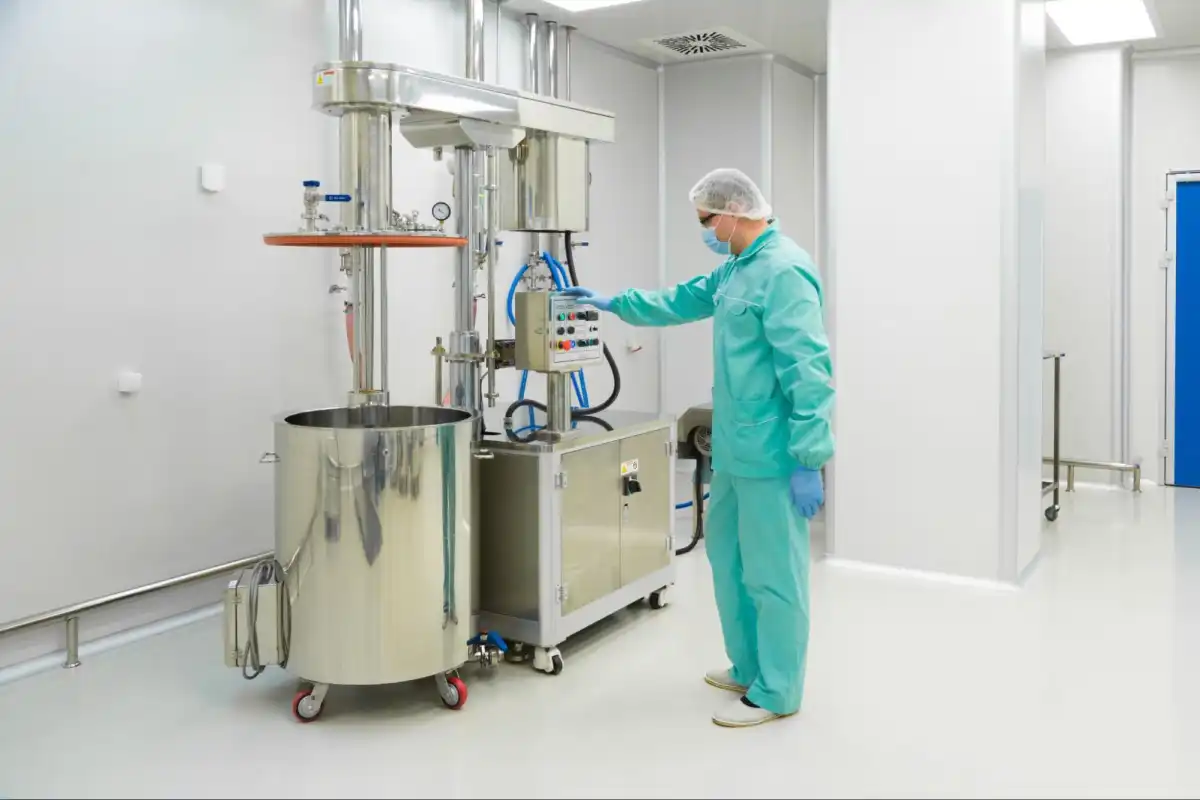
Achieving consistency between batches is a challenge in pharmaceutical mixing. Your product’s safety can be affected because even small mixing variations may create regulatory problems and change how well the medicine works. Product safety, stability, and performance decline the moment variations appear in your mixing process.
Quality expectations depend heavily on your pharmaceutical mixing equipment. You need precise timing and careful control to get the right blend in advanced pharmaceutical operations. Weak mixing systems lead to uneven results that become costly through rework or rejected batches, which lowers profitability. Shifts in chemical composition from one batch to the next continue to be a barrier to dependable results.
You need solid mixing process optimization to stay compliant and protect both patients and your bottom line. At AquaShear, we understand how important consistent batch mixing is for your production goals. Here is how you can improve your mixing and strengthen your overall process.
The impact
Mixing plays a huge part determining product quality in pharmaceutical production. Your product’s therapeutic outcomes depend directly on proper pharmaceutical mixing that ensures uniform distribution of active ingredients. Manufacturers must balance efficacy requirements with production efficiency in this complex process.
Why consistency matters in drug manufacturing
Pharmaceutical reliability depends heavily on batch-to-batch consistency. Biologics manufacturing requires strict variability control and products must pass hundreds of tests before market release. Failed consistency between batches can result in hefty regulatory penalties and might harm patients.
A single failed batch creates serious financial consequences for pharmaceutical companies. Companies face extensive investigations, lost yields, and long periods of downtime. The problem extends to approved products too. Research shows some products don’t pass bioequivalence testing against themselves due to batch variations.
Common causes of batch variability
Several factors create inconsistent pharmaceutical batches.
- Raw material variations – The API’s blend uniformity changes when excipient properties shift. The blend’s behavior substantially changes based on particle size distribution, moisture content, and flowability.
- Process deviations – Manufacturing steps from granulation to tableting can introduce variability. Research shows continuous blending gives more homogeneous results than traditional batch processes.
- Equipment limitations – A mixer’s design greatly affects uniformity. Bottom-mounted mixers with contact points can damage proteins and create particles that clog filter membranes.
- Human factors – Human-related issues cause 40-70% of manufacturing variability, including gaps in training and inconsistent procedures.
How mixing influences product quality
Your product’s homogeneity depends on the mixing process, a key factor for dosage uniformity. API distribution must stay within ±5% throughout the batch volume to meet pharmaceutical standards. Good mixing prevents ingredient segregation that can lead to tablets with varying API concentrations, sometimes reaching 10-20% variation.
Inline mixers, like AquaShear’s, solve these challenges through controlled mixing that delivers uniform distribution without traditional equipment’s drawbacks. The technology completes mixing fast, while reducing waste and downtime substantially, unlike conventional systems that need hours of processing.

Core elements of pharmaceutical mixing systems
Pharmaceutical mixing systems need specialized features that go beyond simple industrial equipment. Modern pharmaceutical mixing needs precise control systems to meet efficacy and regulatory compliance. The right equipment acts as your key business tool and affects batch cycle times, operational costs, and product quality.
Controlled mixing for uniform distribution
The life-blood of pharmaceutical mixing comes from achieving uniform distribution of active ingredients in your formulation. Your mixing equipment should create consistent circulation patterns that eliminate dead zones, where unmixed material could affect dosage uniformity.
Research shows that homogeneous mixing relates to accurate API dosage delivery. The mixing mechanism should provide enough energy input without excessive shear that could damage delicate compounds.
Temperature control during mixing
Product stability depends on exact temperature management during pharmaceutical mixing. Industry standards require jacketed vessel designs to provide temperature control within ±1°C. This prevents thermal degradation of heat-sensitive compounds. Both heating and cooling capabilities help maintain optimal processing conditions throughout your formulation development. Temperature changes can trigger unwanted chemical reactions that lead to byproduct formation or protein denaturation in bioreactors.
Pharmaceutical mixing equipment design
The physical design of pharmaceutical mixing equipment plays an important part in meeting compliance and validation requirements. Surfaces must be smooth and easy to clean so they don’t trap residue, and the overall layout should support reliable cleaning and inspection.

Reducing variability through better mixing practices
Your first line of defense against batch variability in pharmaceutical production lies in proper mixing techniques. The stringent uniformity requirements depend on your practices, even with excellent equipment. The main goal stays the same. You need uniform distribution of active ingredients within ±5% throughout the batch volume.
Minimizing ingredient separation
Pharmaceutical powders face almost inevitable segregation, the collateral damage of materials separating, as they move through your process. Quality inconsistencies pop up at the beginning and end of batch operations because segregation can happen during every transfer step. Three key mechanisms guide this separation.
- Sifting segregation: Smaller particles move through gaps between larger ones
- Fluidization segregation: Fine particles become aerated and separate vertically
- Dusting segregation: Superfine particles drift with air currents
The quickest way to curb these issues involves multi-point filling during material transfers and maintaining confined, dense flow patterns.
Avoiding overmixing or undermixing
Your batch quality faces threats from both insufficient and excessive mixing. API variations can reach 10-20% in batches that don’t get mixed enough. The situation becomes equally problematic with overmixing. Materials with varying bulk densities face a higher risk of demixing during extended mixing times. The friction from excessive mixing breaks down ingredients and creates potentially dangerous triboelectric effects.
Ensuring repeatability across batches
Systematic approaches to process validation create batch-to-batch consistency. Production lines with automated control charts let operators spot and fix variations immediately, as shown in real-life applications. The batch mixing method substantially reduces quality variations by combining different batches in well-designed proportions.
AquaShear’s inline mixing system gives you control over process parameters with complete documentation that meets regulatory compliance. You get consistent pharmaceutical mixing that needs little maintenance. This approach protects product quality and improves operational efficiency.

Why upgrade to an AquaShear inline mixer
Pharmaceutical mixing technology upgrades provide substantial returns on investment. Traditional batch mixers create bottlenecks that affect product quality and increase operational costs. Inline mixing emerges as a better alternative that directly tackles these challenges.
Inline mixing vs traditional batch mixing
Multiple transfers between vessels in traditional batch mixing create risks of contamination and product loss. Inline mixers work differently by processing materials continuously as they flow through the system. This eliminates the need for time-consuming batch processing.
AquaShear’s inline technology handles both low and high-volume production with the same compact equipment. This saves valuable floor space and cuts energy consumption by up to 50%.
Benefits of AquaShear's shear control
AquaShear’s system differs from mechanical mixers that use blades. It creates powerful opposing fluid streams in a precision-machined chamber.
99% polymer activation in a single pass
Uniform mixing without mechanical shearing
Complete elimination of sedimentation
The system pre-blends materials before they enter high-shear stages. This prevents temperature spikes that can damage sensitive pharmaceutical ingredients.
Improved efficiency and reduced downtime
Field tests show that AquaShear cuts mixing time from six hours to just 45 minutes and reduces chemical usage by 52%. Companies ended up seeing ROI within nine months. The system has no moving parts to fail, which drops maintenance needs to just 15 minutes quarterly. This eliminates mechanical breakdowns common in traditional systems.
Compatibility with pharmaceutical mixing machines
AquaShear’s inline mixer comes with standard sanitary fittings that merge naturally with existing pharmaceutical equipment. Teams can complete installation in under four hours, enabling quick deployment without extensive modernizing. The clean-in-place design completes cleaning cycles in 5-10 minutes. This improves operational efficiency while maintaining strict compliance with pharmaceutical regulations.

Pharmaceutical Mixing Impacts Quality
Pharmaceutical mixing has a direct impact on product quality, compliance, and overall performance. Even small variations can lead to rejections, reduced effectiveness, or costly delays. AquaShear’s inline technology addresses these issues by delivering fast, consistent mixing while avoiding the problems seen with traditional batch systems.
Companies using AquaShear (Contact) reduce waste, shorten processing times, and maintain stable results across every batch. With no moving parts and quick cleaning, the system keeps operations running smoothly while supporting strict production requirements.
Pharmaceutical Mixing Frequently Asked Questions
Why is mixing crucial in pharmaceutical manufacturing?
Mixing plays an important part in pharmaceutical manufacturing because it directly affects how evenly active ingredients are distributed throughout a product. Consistent blending helps support reliable dosing and patient safety. It also supports smooth production and helps companies stay aligned with regulatory expectations.
How does pharmaceutical mixing influence batch consistency?
Pharmaceutical mixing significantly influences batch consistency by ensuring uniform distribution of active ingredients throughout the formulation. Proper mixing techniques and equipment help minimize ingredient separation, prevent over or under-mixing, and maintain consistent quality across batches. This consistency is crucial for meeting regulatory standards and ensuring product efficacy.
What are the advantages of inline mixing over traditional batch mixing?
Inline mixing offers several advantages over traditional batch mixing, including reduced processing time, lower energy consumption, and decreased risk of contamination. It allows for continuous processing, eliminates the need for multiple transfers between vessels, and can handle both low and high-volume production with the same compact equipment. Inline mixing also often results in more uniform product quality and reduced chemical usage.
How can pharmaceutical companies reduce batch variability?
Companies can reduce batch variability by implementing better mixing practices, such as minimizing ingredient separation, avoiding over or under-mixing, and ensuring repeatability across batches. Using advanced mixing technologies like inline mixers, implementing automated control systems, and following strict quality control measures can also help maintain consistency in pharmaceutical production.
What factors contribute to inconsistencies in pharmaceutical batches?
Several factors can lead to inconsistencies in pharmaceutical batches, including raw material variations, process deviations, equipment limitations, and human factors. Variations in excipient properties, changes in manufacturing steps, mixer design issues, and procedural inconsistencies can all impact batch uniformity. Addressing these factors is crucial for maintaining product quality and meeting regulatory requirements.