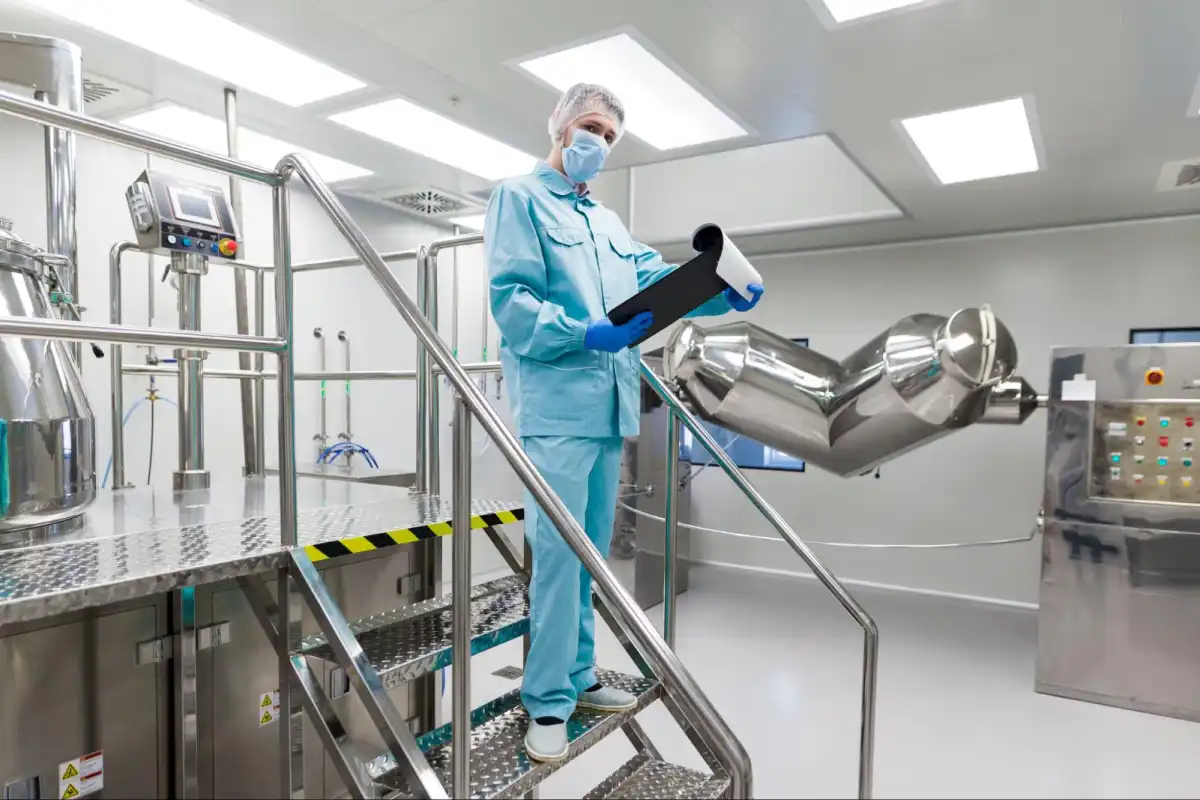
The right mixing equipment plays a vital role in your food processing operation’s regulatory compliance and efficiency. Your choice of commercial food mixer can significantly affect various applications and production goals. A mixer that’s too small will slow down your resources and make output targets impossible to reach. On the flip side, bigger machines take up precious space and waste energy.
Food grade mixing equipment needs to meet specific industry standards while delivering the functionality your process demands. USDA compliant mixers should include CIP (Clean-in-Place) and SIP (Sterilize-in-Place) features to stop contamination between batches. These sanitary mixing systems help your facility meet FDA, USDA, and GMP sanitation requirements.
AquaShear has a clear understanding of what FDA approved mixing equipment must deliver. Here is what to keep in mind as you review your options.
Define Your Mixing Needs
The right FDA approved mixing equipment needs a clear picture of your process requirements. You need to get a full picture of three key factors that will shape your equipment setup.
Identify your product type and viscosity
Your material’s viscosity, how much it resists flow, plays a vital role in choosing the right mixer. Thick substances like honey need more powerful mixing systems than thin liquids like water. Viscosity affects how materials mix together, especially when you combine liquids of different thicknesses.
The Reynolds number of your materials tells you a lot. This measurement shows how a liquid will flow based on its viscosity, flow velocity, and density. Higher numbers mean more intense mixing as materials shift from laminar to turbulent flow. Lower numbers lead to more optimized, gentler mixing. Food-grade applications need special attention to temperature. Some ingredients mix well only within specific temperature ranges.
Determine batch size and production volume
Your monthly and annual production goals help guide the right mixer size for your operation. A good starting point is understanding how much product you need to move each hour. This gives you a realistic picture of the workload your mixer must handle.
Once you understand your output expectations, focus on choosing a mixer that can comfortably support your typical batch size without pushing the equipment to its limits. Your hopper or feeding system should be sized to keep ingredients moving smoothly and prevent bottlenecks during loading.
The goal is to choose a mixer that supports your production pace, fits your process flow, and keeps your operation running consistently.
Understand your process goals
Each mixing goal needs equipment setups. Mixing operations fall into three types.
- Blending works best for gentle mixing where ingredients keep their individual properties
- Emulsifying needs high-shear mixing to blend liquids that don’t normally mix
- Dispersing breaks down clumps in materials
Food processing might involve mixing liquids together or adding powders to liquids. Your specific goal determines the flow type needed, radial, axial, or high-agitation. This helps pick the best hygienic mixer design for your operation.
Match Equipment to Compliance Requirements
Performance specs matter but regulatory compliance is crucial when choosing mixing equipment for food processing. Companies must meet proper standards to operate legally and protect consumer health while building market trust.
What FDA approval really means for mixing equipment
Many people think the FDA directly approves mixing equipment, but that’s not true. FDA regulations make sure materials used in food contact surfaces don’t react, add to, or absorb anything that could affect food safety or quality. The agency oversees about 80% of the U.S. food supply. They set standards for production, processing, and labeling.
FDA compliance for mixing equipment means following specific material requirements found in 21 CFR regulations. These rules make sure food-touching surfaces won’t leak harmful chemicals or risk safety in any way.
Understanding USDA compliant mixers
The USDA’s Food Safety Inspection Service (FSIS) handles the other 20% of U.S. food supply, which includes meat and poultry. The FDA checks facilities periodically. In stark comparison to this, USDA puts inspectors right at processing facilities to watch operations all the time.
Cornell Law states that USDA-compliant mixers need specific design features. They must “mix the cheese carefully and keep shattering of the curd particles to a minimum.” These mixers should be “readily cleanable” with proper seals for shafts that go through tank walls.
The USDA equipment review looks at three key things: design, construction materials, and how they’re made – all related to how easy they are to clean.
Certifications to look for in food grade mixing equipment
Here are some independent certifications that show compliance with industry standards.
This certification is accessible to more people and makes sure equipment meets strict sanitary design criteria made specifically for dairy and food equipment.
NSF has been the way to measure commercial foodservice equipment since the 1940s. They check material safety, evaluate designs, and audit production facilities.
Equipment sold in the European Economic Area needs this mark to show it follows EU safety rules.
Equipment with proper certification reduces contamination risks. It makes health inspections easier and shows your steadfast dedication to food safety standards.
Evaluate Design and Integration Factors
The selection of equipment that meets regulatory standards leads to a review of practical design and integration factors. Your mixing operation’s functionality and efficiency depend on these critical elements.
Hygienic mixer design and cleanability
A good hygienic design prevents contamination and reduces cleaning time. Sanitary mixers should have smooth, crevice-free surfaces with self-draining slopes to stop liquid pooling. The equipment needs food-grade stainless steel construction. SUS316 works best for superior corrosion resistance in high-sanitation environments. A truly hygienic mixer must have the following.
Tool-less disassembly for quick cleaning
Open-frame construction that allows access to all components
Hermetically sealed hollow areas to prevent bacterial growth
Hygienic welds without exposed threads where bacteria can grow
Space planning and installation needs
The right mounting and installation substantially affect mixer performance. Your mounting choice must handle the reactionary force from the mixer’s torque at the fluid level inside the tank. Tank size, type, mixer orientation, and available space need careful review before installation.
Some applications need specific placement. Center mounting creates circular vortex generation while off-center mounting produces particular flow patterns. Companies should also look at ceiling height, access requirements, and infrastructure changes.
Control systems and automation compatibility
Modern control systems connect your process to profitability. Automated mixing operations bring real benefits, such as higher product yield, lower production costs, shorter cycle times, faster changeovers, and longer equipment life.
PLC (Programmable Logic Controller) systems with customized HMI interfaces control recipes. This ensures consistent batches while supporting complete traceability. Advanced systems let you monitor mixer performance from smartphones or tablets, whatever your location in the plant.
Maintenance and downtime considerations
Unplanned downtime costs industrial manufacturing about $50 billion yearly. Good preventative maintenance strategies help equipment last and prevent breakdowns.
Regular inspections should check drive belts, gearboxes, seals, and blade/impeller condition. Using the right food-grade lubricants prevents contamination and ensures smooth operation. Predictive maintenance through sensor-based monitoring helps spot potential issues early, cutting repair costs. This lets you schedule maintenance during non-production times to maximize operational uptime.
Why AquaShear is the Right Choice
Let’s get into why AquaShear leads the pack as the top choice for food manufacturers who need FDA approved mixing equipment.
Inline mixer technology built for sanitary applications
Your operation shouldn’t slow down because of mixing issues. AquaShear’s inline mixers get the job done in under an hour with minimal waste and downtime. Traditional batch mixers take hours, and static mixers create dead zones.
AquaShear’s innovative technology delivers complete results in just one pass. The design generates a powerful vortex as two liquid streams collide inside the chamber, which ensures perfect mixing without any lumps or clumps.
Meets FDA, USDA, and 3-A standards
AquaShear’s 304 stainless steel units come with Teflon nozzle disks and food-grade gaskets that are perfect for food and pharmaceutical applications. The construction meets all FDA requirements and supports hygienic design concepts. You’ll find 316L certifiable stainless steel in all wetted components that meet USP traceability standards.
Custom engineering for your specific process
You can get AquaShear units designed for most flow rates, and chamber sizes range from 1″ to 14″ to match your mixing needs. The skid mounts fit right into your pipe loop in under four hours using standard Victaulic or ANSI flanges.
Ongoing support and training from AquaShear experts
Choose FDA Approved Mixing Equipment
Choosing the right FDA approved mixing equipment has a direct impact on product quality, sanitation, and long-term reliability. The mixer you select needs to match your viscosity requirements, batch sizes, and production goals while meeting all FDA and USDA expectations. AquaShear provides a sanitary inline solution that addresses these needs with consistent mixing, smooth operation, and dependable performance across a wide range of applications.
AquaShear helps food processors avoid the delays and irregular results that come from traditional batch and static systems. The stainless steel construction, simple upkeep, and single-pass mixing design support steady production without unnecessary interruptions. If you are ready to upgrade your process and improve your results, now is the time to explore how AquaShear can support your operation.
Frequently Asked Questions