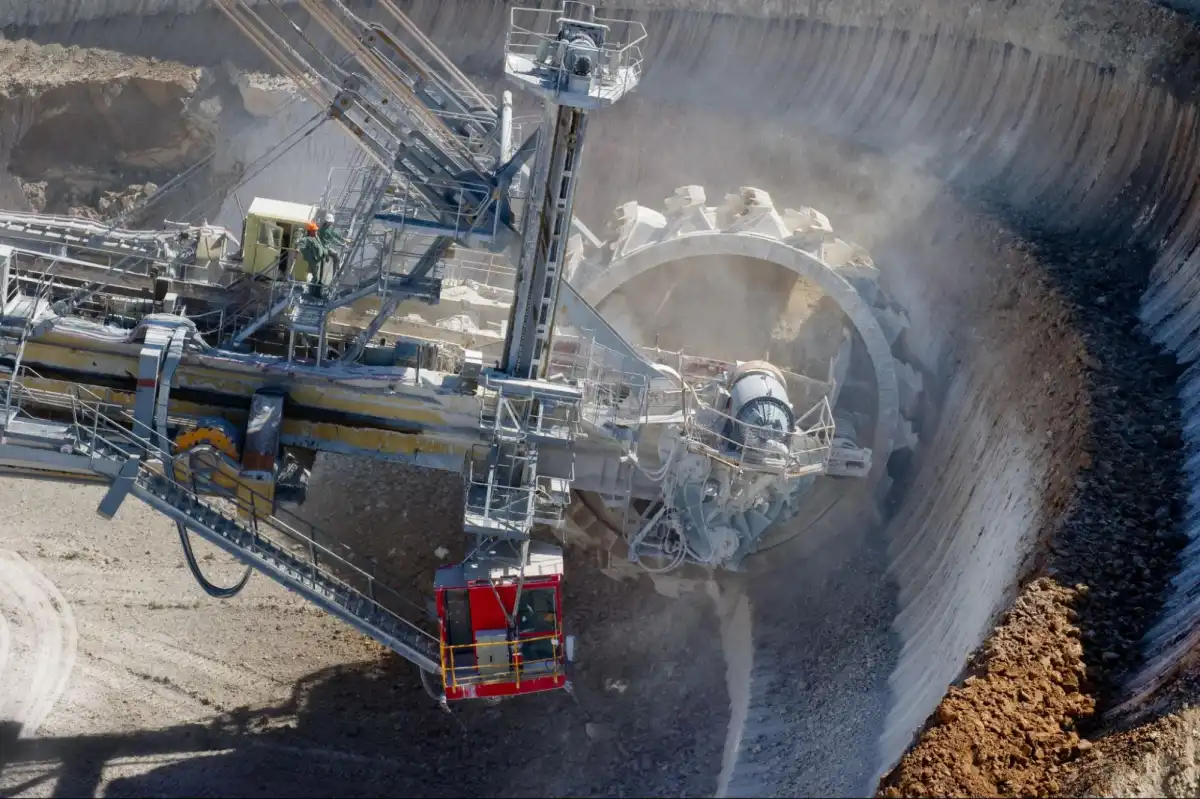
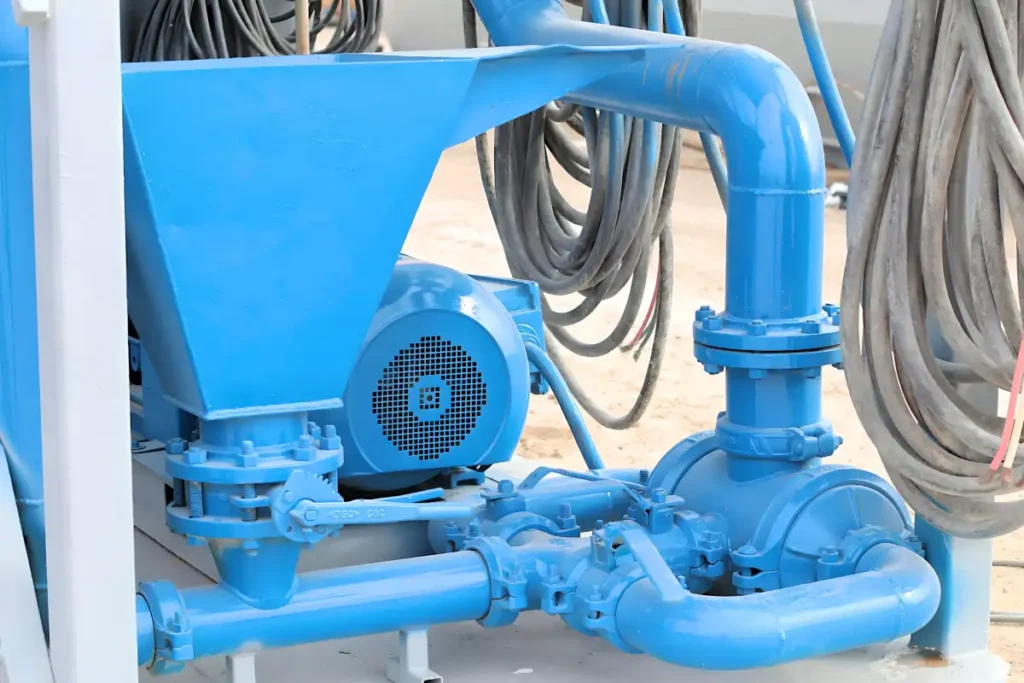
Slurry management plays an important role in process efficiency in mining operations. Poorly mixed slurries can increase water demand, reduce recovery rates, and elevate the risk of contamination in nearby lakes, rivers, and groundwater. Modern approaches such as paste tailings plants demonstrate what is possible, increasing solids concentration compared to conventional thickeners and enabling far more water to be reclaimed and reused on-site.
Better slurry handling also supports broader operational sustainability across many industries. A concrete plant producing 1.2 million cubic meters annually, for example, can generate more than 60 tons of wastewater from equipment cleaning alone. This illustrates the growing need for effective treatment and recycling systems.
At AquaShear, we understand how proper slurry mixing can reduce water use and improve recovery across mining operations. Here is what you need to know about the role of slurry mixing in efficient, responsible mineral processing.
The role of slurry mixing in mining operations
Slurry mixing is the foundation of mineral processing. Mining companies use properly mixed slurries for everything from mineral extraction to waste management. These mixtures play a vital role in your operation’s success.
What is a slurry mixture?
A slurry is a mixture of insoluble solids suspended in a liquid, usually water. The mixture’s consistency changes based on solid content, and particle sizes range from 1 micrometer up to hundreds of millimeters. You’ll find two main types of slurries. Non-settling (homogenous) slurries contain highly concentrated, fine particles. Settling slurries have lower concentration and larger particles that tend to sink to container bottoms.
A proper slurry’s key feature is its ability to flow, which sets it apart from thicker pastes that don’t move under their own weight. This flowing nature makes it possible to transport materials through pipelines and processing equipment across your mining operation.
Why slurry mixing matters in mineral recovery
Your recovery rates and operational efficiency depend directly on proper slurry mixing. Agitators ensure ores mix uniformly with reagents in mineral processing. This maximizes chemical reactions and boosts mineral recovery. The right mixing keeps solid particles floating in the liquid phase, which prevents settling and maintains steady flow through processing systems.
Complete mixing slurry helps lighter particles rise to the surface for collection, especially in flotation cells. The process also keeps ores and leaching agents in contact during hydrometallurgy, which improves metal recovery rates. Poor agitation leads to inefficient separation and recovery of valuable minerals, resulting in lower yields and more waste.
Common challenges in mixing slurry effectively
Mining operations don’t deal very well with several mixing challenges.
Mechanical failures in agitator systems get pricey with downtime
Erosion wear from abrasive particles damages equipment
Sedimentation build-up creates processing bottlenecks
Scale formation affects mixing efficiency
Tank bogging halts operations completely
Slurries with high solid content cause major wear on equipment, so you need specialized abrasion-resistant materials. Thicker slurries create viscosity challenges that require high-torque agitators. These problems can trigger unplanned maintenance, budget overruns, and production delays without proper handling.
How better slurry mixing improves recovery rates
Your mining operation’s success depends heavily on slurry mixing quality. The right mixing techniques can boost recovery rates, cut water usage, and make your equipment last longer.
Improved particle suspension and distribution
Good mixing creates a three-stage particle dispersion process, agglomeration motion, disintegration, and bed diffusion. Slurry particles move across the mixture first. They break apart at the opposite wall and then flow uniformly with the main particles. The best mixing stops dead zones where particles settle out of suspension. Research shows streamlined pipe geometry reduces the minimum transport Reynolds number. This allows operations to handle higher particle concentrations without clogging.
Improved reagent contact and chemical reactions
Quality mixing changes how reagents work with your ore. Agitators in conditioning tanks mix ores with reagents to maximize particle-chemical contact. This contact plays a vital role since reactions happen only when particles and reagents meet physically. Studies show that adding sonication steps during mixing boosts mixture uniformity without damaging material microstructure. This results in better electrochemical performance. Dual impeller setups outperform single impellers in flotation processes with superior agitation pretreatment.
Reduced settling and clogging in pipelines
Pipeline clogging poses a major operational risk. Asphaltene aggregation clogs more than 72,000 miles of pipeline in the U.S. alone. This creates huge economic and environmental risks. Well-mixed slurries keep particles distributed evenly to prevent sedimentation that causes blockages. Tests show reduced dead zones in pipe geometry can increase plug-free particle concentration. This enables higher throughput without interruptions. Better flow reduces equipment wear and cuts maintenance downtime.
Mixing techniques become more important as slurry viscosity increases. Higher solid concentrations typically raise yield stress values. This makes effective mixing technology essential.
Water savings through optimized slurry handling
Water conservation matters just as much as mineral recovery in today’s resource-aware mining industry. Mining companies can save water most effectively through proper slurry handling. This matters because the industry needs large amounts of water for mineral extraction, processing, and waste management.
How slurry water recycling works
Mining operations use closed-loop systems to recycle water throughout their processing cycle. These systems catch water at different stages, clean out contaminants, and pump it back into the operation. Companies that use closed-loop recycling can reduce water consumption in mining by up to 40%. This saves money, especially in places where water is scarce or costly.
The recycling process has these key steps.
- Advanced treatment methods such as membrane filtration and reverse osmosis
- Thickening and dewatering processes that separate solids from liquids
- Water recovery systems merged with tailings management
- Continuous monitoring technologies that check water quality
The Khumani mine in South Africa’s semi-arid region shows what’s possible. Their two-stage tailings thickening process saves more than 95% of the water used in slurry processing.
Reducing fresh water intake with better mixing
Better slurry mixing helps save water by getting more out of every drop used. When mixing is done right, particles and reagents spread evenly. This lets companies process higher solids concentrations with less water. Simple steps like maintaining and watching mixing systems can cut water waste by about 15%.
New dry processing methods that use advanced mixing technology can reduce water use by 25%. Better mixing also helps cement in slurry mixtures flow better without adding more water.
Impact on tailings and paste tailings plant efficiency
Traditional tailings storage creates big challenges for water management and poses environmental risks. Paste tailings technology offers a better way. These plants use thickeners to boost solids concentration from 45-50% in regular systems to 65-70% in paste thickeners. This means more water gets recovered before deposition.
The benefits go beyond saving water. Paste tailings facilities need only half the space of regular ponds because of steeper beach slopes. The thicker paste material also has less free water, which makes dam failures less likely. Plants using these technologies can reuse processed water right away in their concentration plants. This cuts the need for fresh water in areas where it’s scarce.
Why upgrade to an inline mixer from AquaShear
You need to think over equipment upgrades that will revolutionize your mining operation after learning about effective slurry mixing benefits. AquaShear’s innovative inline mixer sets new standards with its groundbreaking approach to handling mining slurries.
What is an inline mixer and how it works
The inline mixers work differently from traditional systems by connecting directly to existing pipelines and processing materials as they flow through. AquaShear’s design creates powerful opposing fluid streams in a specialized chamber. These streams generate a strong vortex when arranged at a precise 0.1° angle.
This hydraulic force emulsifies all particles instantly without mechanical shearing, which results in uniform mixing with zero sediment. The system runs without moving parts or blades, which eliminates common failure points.
Benefits over traditional mixing methods
Traditional mixing methods come with many challenges. Batch systems need hours to process, while conventional static mixers create dead zones and clog frequently. AquaShear provides these advantages.
Complete dispersion happens in just one run
Blending occurs instantly instead of hours with conventional systems
The system fits directly into existing pipelines using minimal space
Particles stay suspended better at all slurry levels
Real-life performance improvements
Field tests show remarkable outcomes. Companies cut their chemical usage by up to 52%. Mixing cycles that took 6 hours with mechanical systems now finish in 45-60 minutes. Tests confirm 99% polymer activation happens in just one second.
Custom solutions for different slurry types
Standard mining operations use carbon steel units with polyurethane nozzle disks that handle abrasive materials well. Corrosive applications work best with 316 stainless steel and Delrin nozzle disks for maximum durability. High-temperature polyurethanes can handle environments up to 250°F. The system adapts easily to mining applications of all types, including solvent extraction, slurry management, and water treatment.
Modern Mining Operations Need Reliable Slurry Mixing
Modern mining operations need reliable slurry mixing to maintain recovery rates and reduce water demand. Better mixing supports efficient solids handling, improves reagent performance, and helps operations reclaim a greater share of process water, especially when paired with technologies such as paste tailings systems.
AquaShear’s inline mixer offers a practical way to achieve these goals. It delivers uniform mixing in a single pass, reduces chemical usage, limits maintenance, and prevents the settling issues common in traditional systems. For mining operations looking to improve performance while reducing freshwater intake, upgrading slurry mixing technology is a direct and effective step.
If you’re ready to improve water use and recovery at your mine, contact AquaShear to discuss how our inline mixer can support your operation.
Frequently Asked Questions