Inline Polymer Activation System

Polymer activation is where most inline mixers quietly fail. Fisheyes slip through. Chains don’t hydrate. You either overdose polymer to compensate or slow the process down to let mechanical mixers catch up. Both cost money.

AquaShear’s inline polymer activation system fixes that with no blades, no aging tanks, and a single pass through the mixing chamber.
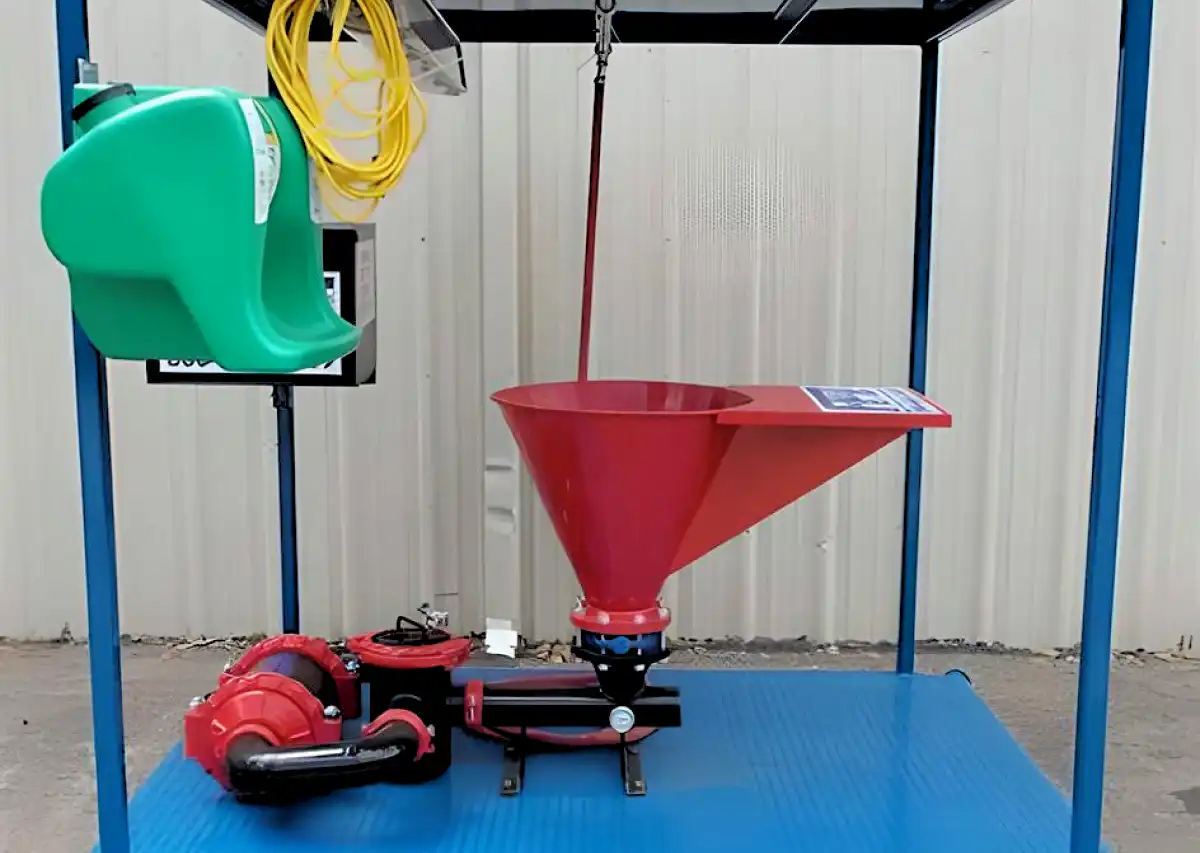
AquaShear inline mixing system side view with red hopper funnel, red mixer unit, green chemical tank, and blue steel safety frame

What Proper Polymer Activation Actually Requires

Polymer activation is a hydration process. Each chain has to unfold and extend in water without breaking. Get the shear profile wrong and you either leave unhydrated fisheyes in your line or chop the chains and lose viscosity. Both hurt performance downstream, whether you’re flocculating in a clarifier, carrying cuttings out of a wellbore, or dewatering sludge.

Most systems try to force activation with high-RPM mechanical mixers and long residence times in a make-down tank. That approach works, slowly, and it wastes polymer.
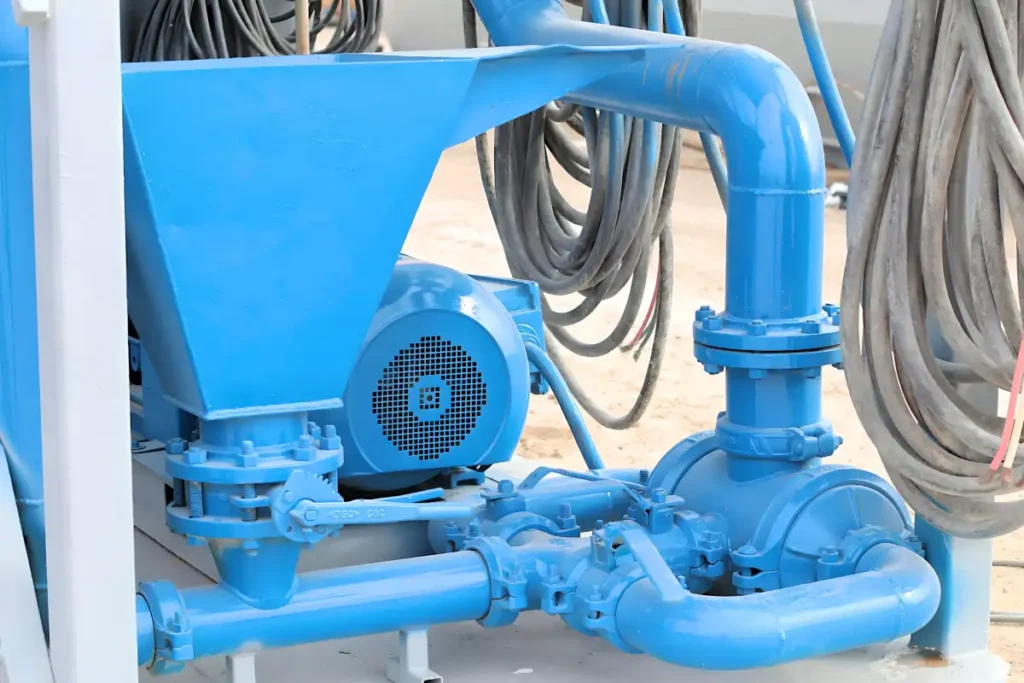
Industrial blue hydraulic inline mixer system with hopper, flanged pipe connections, motor, and valves on job site

Why Standard Inline Mixers Fall Short

Static mixers leave dead zones where polymer falls out of suspension. Paddle mixers shear chains and create fisheyes. Both usually require oversized polymer doses because activation is incomplete, and both need regular teardown because wet polymer builds up on blades and baffles.

The cost shows up three ways, higher polymer spend, longer cycle times, and maintenance hours you didn’t plan for.
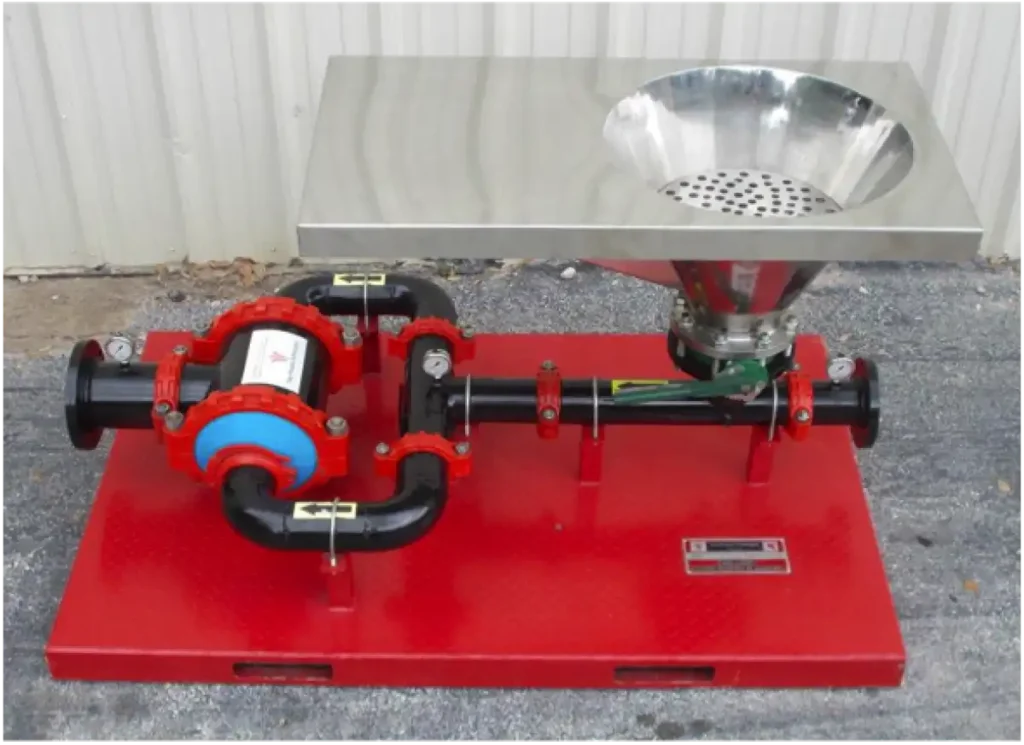
Compact AquaShear inline mixer with stainless steel hopper mounted on red steel skid with black pipe assembly

How AquaShear Activates Polymer in a Single Pass

The AquaShear chamber has no moving parts. Two opposing fluid streams, aligned within 0.1 degrees, collide and generate a controlled vortex inside the chamber. That vortex delivers uniform hydraulic shear across every drop of fluid passing through. Polymer hydrates fully in the turbulence and exits activated.

Lab and Field Performance

Lab testing shows 99% polymer activation in one second. Field results on drilling operations have cut make-down time from six hours to 45 minutes, with a 52% reduction in chemical spend on one drilling program and a 27% cut in total mud cost on another.

One drilling engineer reported.

“Drilling mud costs were reduced by 27% on one program, driven by better dispersion, full hydration, and the elimination of fisheyes and shake blinding.”
Industrial blue hydraulic inline mixer system with hopper, flanged pipe connections, motor, and valves on job site

Trusted By

Polymer Types and Applications We Size For

AquaShear activates dry and emulsion polymers across anionic, cationic, and nonionic chemistries and a wide molecular weight range. Common applications include the following.

Drilling mud polymer activation and hydration

Flocculant activation for water and wastewater treatment

Polymer dosing for enhanced oil recovery

Slurry treatment in mining and mineral processing

Sludge dewatering

What We Need to Size Your System

Every AquaShear unit is built to the application. To quote a polymer activation system, we’ll ask for the following.

Chamber sizes run from 1″ to 14″, with carbon steel, 304 stainless, or 316 stainless construction and matched nozzle and gasket materials for food, pharma, or corrosive service. Units handle up to 250°F and 150 PSIG. Lead time runs 6 to 12 weeks.
Worker inspecting industrial generator equipment.

Request a Polymer Activation Quote

Tell us the application and we’ll size the system. Pricing starts at $1,500 and scales with size, materials, and configuration.