
Sodium Hypochlorite & Chlorine Dilution System
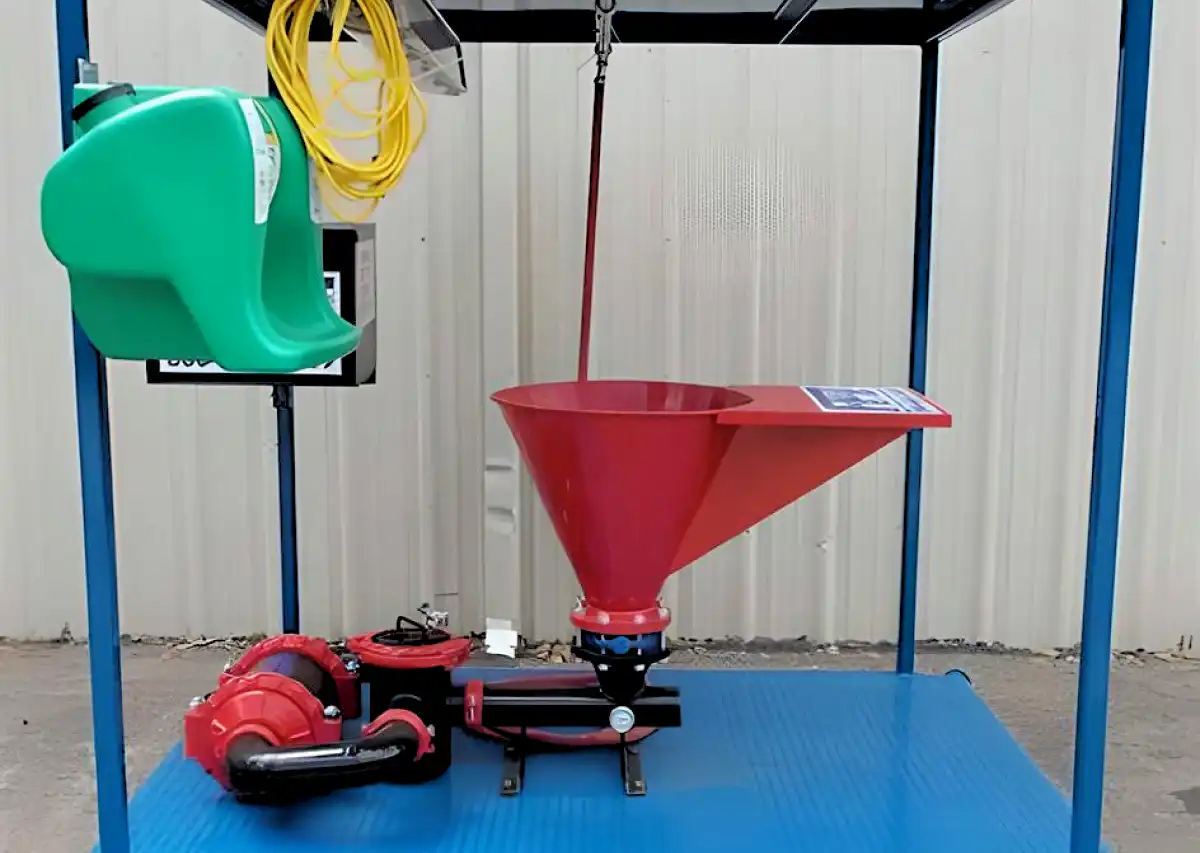
Sodium hypochlorite is corrosive, degrades in the line, and has to be evenly distributed to work. Most dilution setups get one of those three right. AquaShear’s inline sodium hypochlorite dilution system handles all three, with no moving parts to corrode and a single-pass mix that eliminates dead zones.
What Proper Chlorine Dilution Actually Requires
Chlorine disinfection depends on concentration and contact time. If the hypochlorite isn’t evenly distributed the second it hits the process water, you get pockets of high residual, corrosion, disinfection byproducts, taste complaints, and pockets of low residual. The compliance test measures an average. Bacteria live in the low-residual pockets.
Uniform mixing at the point of injection is what makes disinfection work reliably.
Uniform mixing at the point of injection is what makes disinfection work reliably.
Why Standard Mixers Fall Short
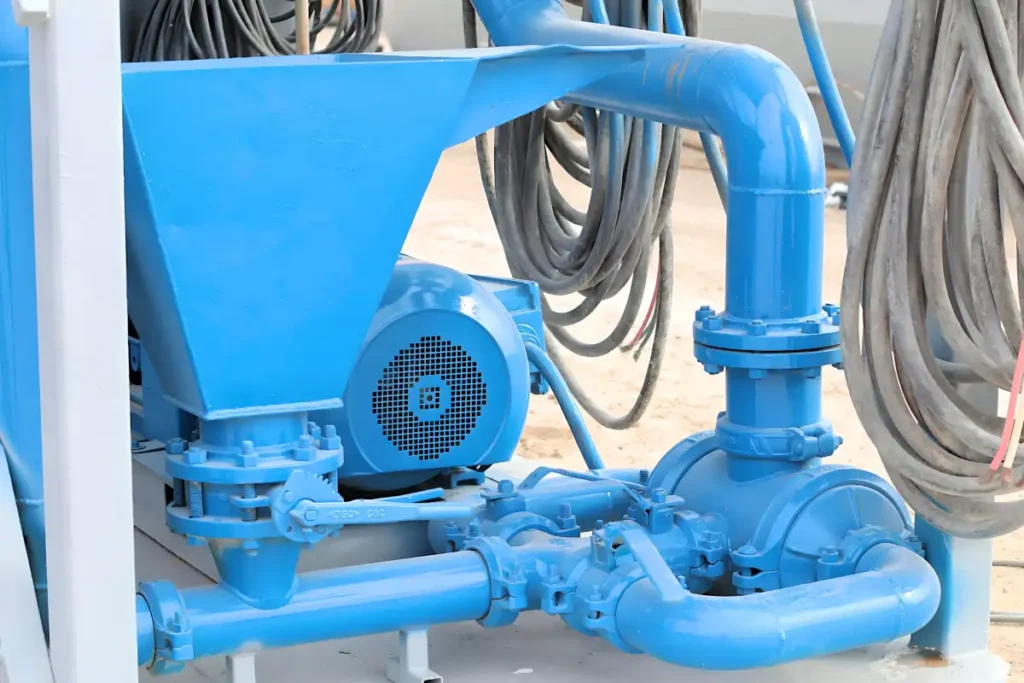
Static mixers give reasonable distribution at design flow but fail at turndown, leaving streaks of concentrated hypochlorite that don’t blend until far downstream. Paddle and mechanical mixers fail faster. Hypochlorite eats through standard seals, gaskets, and bearings, so maintenance intervals shrink and downtime climbs.
Dosing pumps don’t solve this. They meter the chemical. They don’t distribute it.
Dosing pumps don’t solve this. They meter the chemical. They don’t distribute it.
How AquaShear Handles Hypochlorite Service
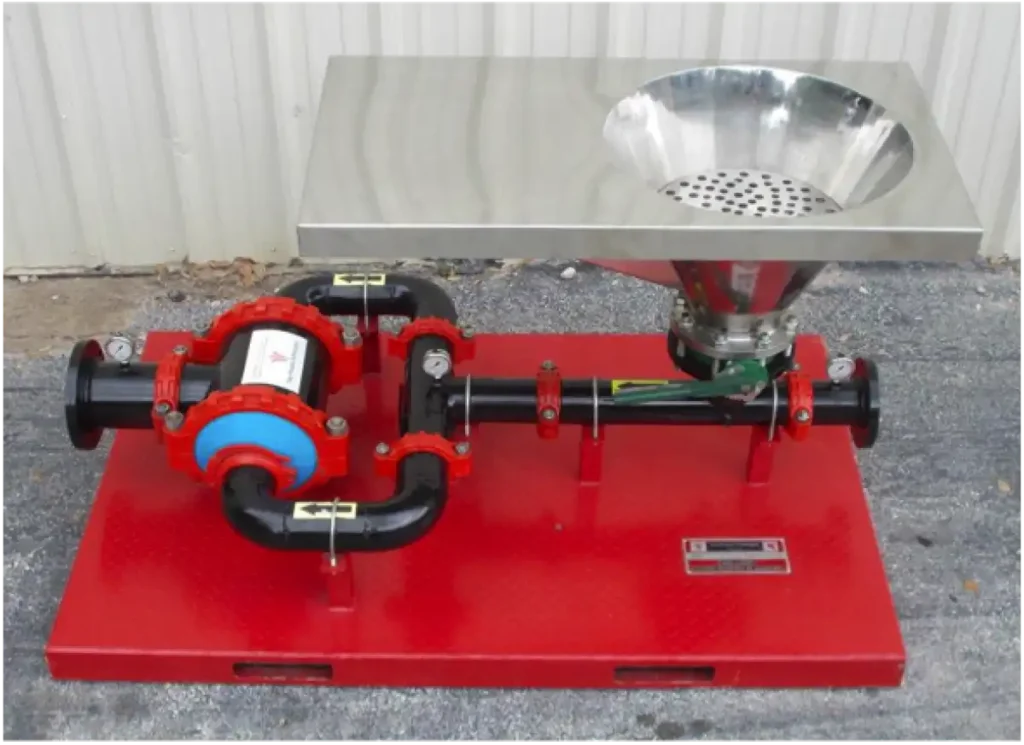
The AquaShear chamber has no bearings, no seals, and no blades. Opposing streams of process water and hypochlorite collide through precision-aligned nozzles and generate a controlled vortex that distributes chlorine uniformly across the pipe cross-section in a single pass. No dead zones, no streaks, no downstream length required to even out concentration.
For hypochlorite service, AquaShear builds the unit in 316 stainless steel with Delrin nozzle disks and Viton gaskets. That combination handles 10-15% sodium hypochlorite and holds up through the temperature and pH swings common in chlorination systems.
For hypochlorite service, AquaShear builds the unit in 316 stainless steel with Delrin nozzle disks and Viton gaskets. That combination handles 10-15% sodium hypochlorite and holds up through the temperature and pH swings common in chlorination systems.
Proven in Corrosive Chemical Service
AquaShear units have run in chlorine, caustic, and acid service for over 20 years with no moving parts to replace. Quarterly maintenance is a 15-minute visual check. No bearings to lubricate, no seals to swap, no impellers to rebuild.
Trusted By












Applications We Size For
AquaShear’s chlorine dilution system handles a range of disinfection and dosing applications, including the following.
Municipal drinking water disinfection
Wastewater and effluent disinfection
Cooling tower and closed-loop biocide dosing
Industrial process water treatment
Food and beverage sanitation systems
Pulp and paper bleaching
Well water and groundwater treatment
What We Need to Size Your System
Every chlorine dilution unit is built to the application. To quote yours, we’ll ask for the following.
- Process water flow rate and operating pressure
- Target chlorine dose (ppm or mg/L)
- Hypochlorite feed concentration (10%, 12.5%, 15%, etc.)
- Water temperature and pH
- Downstream contact time and piping layout
- Regulatory requirements (NSF 61, FDA, local codes)
Chamber sizes run from 1″ to 14″ with 316 stainless steel, Delrin nozzles, and Viton gaskets standard for hypochlorite service. Units handle up to 250°F and 150 PSIG. Lead time runs 6 to 12 weeks.
Request a Chlorine Dilution Quote
Tell us the application and we’ll size the system. Pricing starts at $1,500 and scales with size, materials, and configuration.